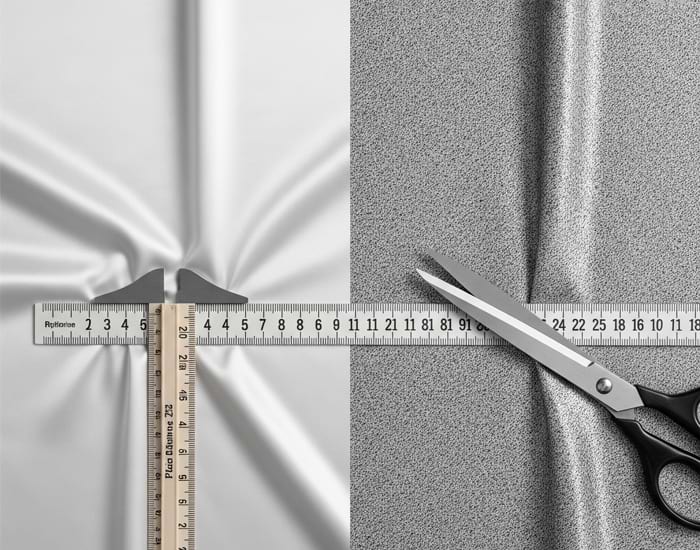
How to Identify a High-Quality Nylon?
To determine the quality of a good nylon, you need to consider various factors such as raw materials, thickness, transparency, flexibility, tear resistance, and other technical features. Here is a comprehensive guide to assessing nylon quality:
Examining the Raw Materials and Composition of Nylon
- High-Quality Raw Materials: Nylons made from premium raw materials (pure LDPE – Low-Density Polyethylene or HDPE – High-Density Polyethylene) have better quality.
- Recycled Materials: Nylons produced from recycled materials usually have a distinct odor, may have a rough surface, and have lower strength compared to high-grade nylons.
How to Identify? ✔ High-quality nylons are softer, more transparent, and free of visible impurities.
✖ Low-quality nylons may appear dull, with black spots or tiny bubbles.
Checking Thickness and Weight of Nylon
- The thickness of nylon is measured in microns (Micron) or mils (Mil).
- Thinner nylons are usually suitable for light packaging.
- Thicker nylons are used for heavy-duty and durable packaging.
How to Identify?
✔ Touch Test: High-quality nylons have a uniform thickness and do not have areas that are significantly thinner than others.
✔ Light Test: Hold the nylon against the light. If certain areas allow more light to pass through, the thickness is inconsistent, indicating lower quality.
Elasticity and Strength of Nylon
A good nylon should have suitable flexibility and withstand stretching and pressure.
How to Identify?
✔ Stretch Test: Pull the nylon slightly. If it stretches slightly without tearing or cracking, it is of good quality.
✖ Low-quality nylons tear quickly and develop tiny cracks.
Tear and Puncture Resistance
A high-quality nylon should be resistant to impact and external pressure.
How to Identify?
✔ Impact Test: Press a sharp object (like a key) against the nylon with moderate pressure. If it punctures easily, the quality is low.
✔ Compression Test: Press the nylon between two fingers. If it wrinkles too quickly or cracks, it has poor quality.
Checking Sealing and Stitching (for Plastic Bags)
If the nylon has stitching (such as in plastic bags), the sealing should be precise and strong.
How to Identify?
✔ Seams should be uniform, without defects, and firmly sealed.
✖ Weak seams will tear easily when slightly pulled.
Transparency and Appearance of Nylon
Transparency is an important factor in assessing the quality of nylon, especially in packaging.
How to Identify?
✔ High-quality nylons are clear and free of dull spots.
✖ Low-quality nylons may have white or yellow streaks or tiny bubbles, indicating they are made from recycled or substandard materials.
Odor of Nylon
Nylons made from recycled or low-quality materials often have an unpleasant and strong odor.
How to Identify?
✔ High-quality nylon is odorless or has a mild plastic smell.
✖ Recycled nylons have a pungent, burnt plastic-like odor.
Recyclability and Environmental Friendliness
High-quality nylons are usually made from recyclable materials.
How to Identify?
✔ Some nylons have the ♻ recycling symbol, indicating they are recyclable.
✔ Biodegradable nylons contain special additives that help them decompose faster.
Resistance to Heat and Cold
Some nylons are designed for food packaging, freezer storage, or high-temperature environments.
How to Identify?
✔ Freezer-safe nylons do not become brittle at low temperatures.
✔ Heat-resistant nylons do not deform at high temperatures.
Weather Resistance Test (for Industrial and Agricultural Nylons)
Certain nylons, like greenhouse films, must be resistant to moisture, sunlight, and wind.
How to Identify?
✔ UV-resistant nylons degrade more slowly when exposed to sunlight.
✔ Water-resistant nylons have a smooth surface that does not absorb moisture.
Conclusion
✔ High-quality raw materials (pure LDPE or HDPE)
✔ Uniform thickness and appropriate for the intended use
✔ Strong resistance to stretching and tearing
✔ Precise and durable sealing (for plastic bags)
✔ Clear appearance without stains, yellowing, or black spots
✔ Odorless or has a mild plastic scent
✔ Recyclable and environmentally friendly
✔ Resistant to heat, cold, moisture, and sunlight (for specific uses)
By following these guidelines, you can differentiate high-quality nylons from low-grade ones and choose the best option for your needs.